
Wait, cutting every trace of fat from your daily breakfast does more harm than you think to your whole-day energy level
Most people have followed this common wrong tip for years without noticing why they feel hungry and sleepy 2 hours after finishing their "super healthy" low-fat breakfast
Walk around any co-working space or college dorm before 9 a.m. and you will spot dozens of people digging into bowls of plain steamed oats, boiled spinach wraps, or plain non-fat yogurt with no added toppings, proudly calling their meal the healthiest breakfast choice possible. A huge share of these people will end up rummaging through desk drawers for a pack of sugary granola bars or a can of sweet soda at 10 a.m., complaining that they cannot focus on work no matter how hard they try, even though they ate a breakfast they thought was perfectly balanced. Most of them never link this mid-morning slump to the decision of removing all fat from their first meal of the day, and they just assume they need to eat more food to stay full the next day.
This widely spread misunderstanding dates back to a decades-old nutrition trend that labeled all fat as a public health enemy, pushing people to cut every gram of fat from their breakfast to cut total calorie intake. What this old guidance missed completely is that refined carbohydrates and high-fiber plant ingredients with no accompanying fat will be digested and absorbed by your digestive system at a surprisingly fast speed, spiking your blood sugar level to a very high point in 30 minutes, before it drops sharply below the normal level two hours later. This sudden blood sugar swing is the exact cause of that brain fog, sudden hunger pang, and uncontrollable craving for high-sugar processed snacks that hit you right before noon, and it can even raise your risk of overeating at lunch to take in far more total calories than you would have if you added a small amount of healthy fat to your breakfast.
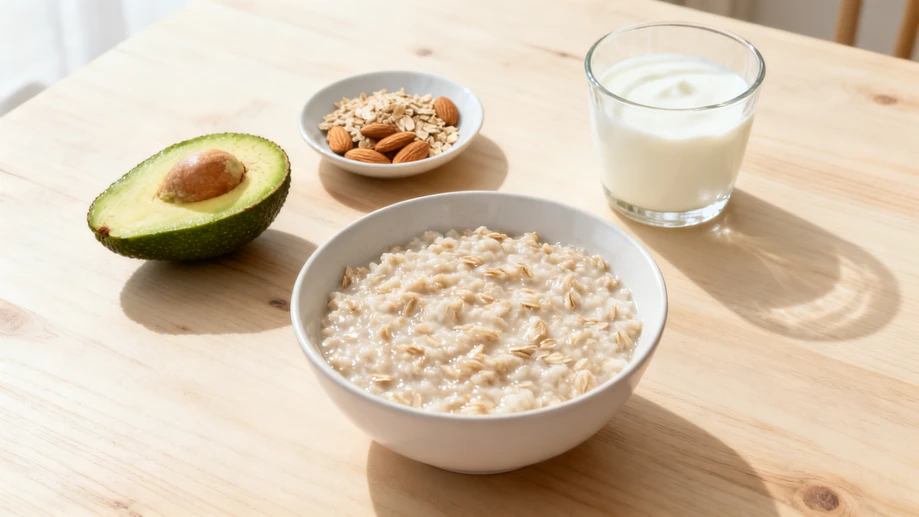
The fix for this problem is far simpler than most people imagine, and you do not need to add extra hundreds of calories or heavy greasy ingredients to your meal. For a regular 300 to 400 calorie breakfast, you only need to add 5 to 7 grams of healthy unsaturated fat, which is roughly equal to 7 to 8 pieces of crushed raw almonds, one third of a small ripe avocado, or one small spoonful of no-added-sugar nut butter. Even this tiny amount of fat will slow down the digestion speed of the carbohydrates in your breakfast smoothly, keeping your blood sugar at a steady, mild rise state instead of a sharp spike, and you will notice you can stay focused and full for at least 3.5 to 4 hours after eating, no mid-meal snack required before lunch. You do not need to make big changes to your existing breakfast recipes either, you can just sprinkle the nut crush on top of your oatmeal, spread the thin layer of nut butter on your whole grain toast, or stir the avocado mash into your non-fat yogurt for a richer, creamier taste with no extra heavy burden.
This small trick works for almost all groups that need stable energy support in the first half of the day, especially for office workers who have back-to-back meetings in the morning and cannot find time to grab a snack at will, high school and college students who have 4 straight hours of classes after breakfast, and middle-aged and elderly people who need to keep their blood sugar level stable for health management. For people who are following a weight management plan, this adjustment also helps avoid the extreme hunger state that often leads to impulsive overeating on high-calorie junk food, making their diet plan far easier to stick to long term, without the annoying constant craving that usually makes people give up on healthy eating in a week. The only group that needs to make tiny adjustments is people who have special fat intake restrictions advised by their doctors, who can consult their nutritionist to find the proper amount of added fat that fits their personal health situation.
Many people overcorrect their breakfast choices in the name of chasing "health", and end up making their daily life far less efficient without getting the benefits they want from their diet. You do not need to make extreme changes to your eating habits to get a high quality nutritious breakfast, a tiny, easy adjustment that adds a very small portion of healthy fat can bring far more obvious benefits than eating a completely fat-free, tasteless breakfast that makes you hungry all morning. This small tweak will not add much to your grocery cost, and it will not take more than 10 seconds of extra time when you make your breakfast every morning, making it one of the most cost effective nutrition hacks you can add to your daily routine.