
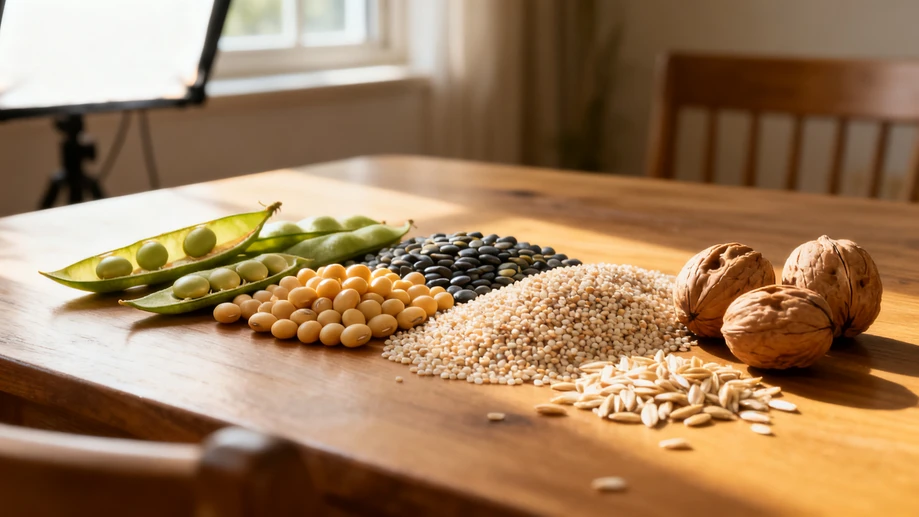
The Surprising Science Behind Why Your Body Craves Plant Protein
Discovering how different protein sources uniquely fuel your cells and enhance wellbeing naturally.
You've likely heard the endless debate about protein sources, with passionate advocates on both sides. What often gets lost in this nutritional tug-of-war is a fascinating biological truth: your body actually absorbs and utilizes plant and animal proteins in fundamentally different ways. This distinction isn't just academic; it impacts everything from muscle repair to long-term metabolic health. While animal proteins provide complete amino acid profiles, emerging research reveals plant proteins offer unique advantages that science is only beginning to fully appreciate.
Proteins are chains of amino acids, and your body requires twenty different types to function optimally. Nine are essential meaning we must obtain them through food. Animal sources like eggs or dairy contain all nine in balanced proportions, earning them "complete protein" status. Plants, however, often lack one or two essential amino acids in significant amounts—soy and quinoa being notable exceptions. This biological puzzle led scientists to investigate how our bodies compensate when relying primarily on plant sources.
Remarkably, the human digestive system demonstrates incredible adaptability when processing plant proteins. Our bodies cleverly combine different plant sources over time to create complete amino acid profiles. Eating rice and beans throughout the day, for example, provides complementary amino acids that together form complete proteins. Research reveals that when consumed regularly, even proteins from single plant sources like nuts or lentils stimulate muscle synthesis nearly as effectively as whey protein. This efficiency stems partly from fiber content in plants which slows digestion, allowing sustained amino acid release.
Beyond muscle building, plant proteins exhibit extraordinary benefits that animal proteins can't match. The natural phytochemicals accompanying plant proteins—like isoflavones in soy or lignans in flaxseeds—act as powerful antioxidants and anti-inflammatory agents. Observational studies consistently link diets rich in plant proteins with reduced risks of cardiovascular disease and type 2 diabetes. Interestingly, the molecular structure of plant proteins makes them less likely to trigger inflammatory responses in the gut compared to some animal proteins. This characteristic may explain why plant-focused diets correlate with lower chronic disease rates.
Metabolism processes plant proteins more efficiently than their animal counterparts. Our bodies expend up to 30% more energy digesting plant proteins—a phenomenon called diet-induced thermogenesis. This metabolic difference means that gram for gram, plant proteins contribute fewer net calories than animal sources. Additionally, plant proteins naturally contain beneficial micronutrients like magnesium and potassium without the saturated fats common in animal products. These nutritional synergies demonstrate why evaluating protein quality extends beyond amino acid checklists to include the full nutritional matrix.
Environmentally speaking, plant proteins require exponentially fewer resources than animal-based options. Producing one kilogram of lentil protein consumes approximately 50 times less water and generates 250 times less greenhouse gas than equivalent beef protein. Even the most efficient animal sources like poultry demand significantly more land and energy than legumes or grains. This ecological efficiency makes plant proteins doubly valuable—not just for personal health but for planetary wellbeing. Future food innovations will likely leverage these advantages as demand for sustainable nutrition grows.
Understanding protein nuance empowers smarter dietary choices without absolutist approaches. Small adjustments like replacing half your beef with mushrooms in burgers or choosing lentils in pasta sauces can shift your protein profile dramatically. The science clearly shows diverse plant proteins offer unparalleled health advantages, while moderate animal proteins remain nutritionally valuable. Ultimately, harnessing the complementary strengths of both creates the most resilient foundation for long-term vitality. Your body instinctively knows this truth—now modern science confirms why we thrive when respecting nature's protein diversity.