
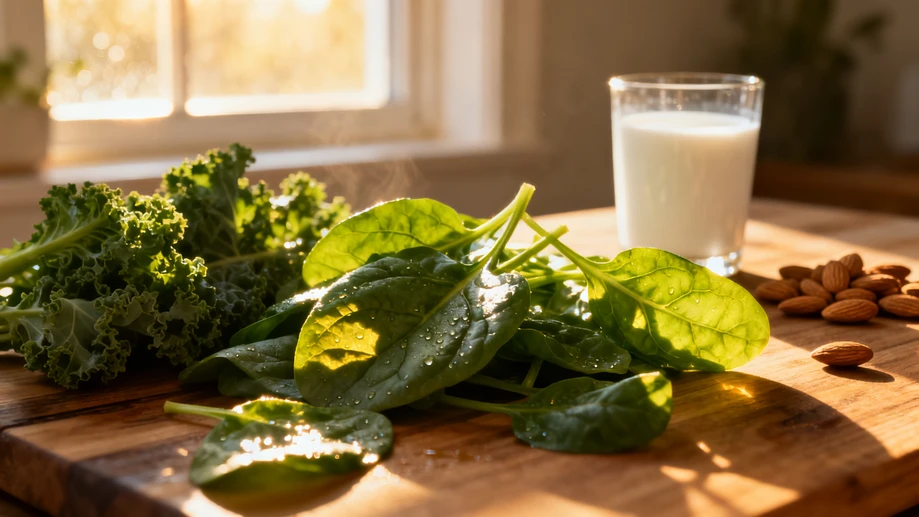
Dark Leafy Greens Unlock the Secret to Fortifying Your Bone Health
Discover how a humble plate of spinach or kale could be your strongest defense against osteoporosis and fractures
Imagine your skeleton as a living cathedral, constantly rebuilding its arches and buttresses. While calcium often steals the spotlight in bone health conversations, an unsung hero works behind the scenes—vitamin K, abundantly found in dark leafy vegetables. This fat-soluble nutrient activates proteins that bind calcium to your bone matrix like biological mortar. Without it, calcium floats uselessly in your bloodstream rather than strengthening your architectural framework. Recent studies reveal adults with high vitamin K intake have 22% lower hip fracture rates, proving that bones require more than just dairy to thrive.
The magic happens through a process called carboxylation, where vitamin K transforms osteocalcin—a protein produced by bone cells—into an active form that anchors calcium molecules. Think of uncarboxylated osteocalcin as a construction worker without tools, unable to cement calcium into bone tissue. Dark greens like Swiss chard, collard greens, and mustard greens deliver vitamin K1, the plant-based form that kickstarts this vital mineralization process. Remarkably, just one cup of cooked kale provides over six times the daily recommended intake, making it one of nature's most potent bone fortifiers.
What makes this discovery particularly fascinating is vitamin K’s partnership with other nutrients. Vitamin D, often celebrated for aiding calcium absorption, actually relies on vitamin K to direct that calcium toward bones rather than arteries. When vitamin K levels dip, calcium may accumulate in blood vessels—a dangerous calcification process. Meanwhile, magnesium from pumpkin seeds and zinc from legumes further optimize vitamin K’s bone-building efficiency. This nutritional synergy transforms a simple salad into a bone-remodeling powerhouse.
Practical integration into daily meals requires neither complexity nor exotic ingredients. Lightly sautéing spinach with garlic enhances vitamin K absorption, as the fat-soluble nutrient pairs perfectly with olive oil. For those averse to bitter greens, blending kale into fruit smoothies masks the flavor while preserving nutrients. Fermented options like traditional natto—though not leafy—offer vitamin K2, another bone-benefitting variant. The key lies in consistency; unlike some nutrients, vitamin K isn’t stored long-term, demanding regular replenishment from our plates.
Beyond skeletal strength, emerging research illuminates vitamin K’s broader impacts. The same carboxylation process that strengthens bones also regulates proteins preventing arterial stiffening. Studies correlate higher green vegetable consumption with reduced inflammation markers and slower cartilage degeneration in joints. Each forkful seems to send ripple effects through our biological systems—from ensuring blood clots properly to potentially shielding brain cells. Yet these benefits remain largely untapped, with nearly half of adults failing to meet basic vitamin K requirements.
The implications extend across generations. Children building peak bone mass and seniors combating osteoporosis both benefit from vitamin K’s scaffolding properties. Unlike supplements that risk overdosing, plant-based vitamin K from greens poses no toxicity threat. As research evolves, dark leafy vegetables emerge not as side dishes but as central players in long-term vitality. That vibrant pile of spinach represents more than fiber—it’s an edible shield against fragility, one crisp leaf at a time redefining what true nourishment means for our enduring architecture.