
Is Eating A Small Midnight Snack Really That Bad For Your Daily Health Goals
We break down common false assumptions around late night eating and share super practical, no-fuss diet tips that fit perfectly into ordinary people’s busy daily schedules.
For decades, diet advice across social media and casual conversation has painted all forms of late night eating as a dangerous enemy of fitness and health, claiming that any food consumed after 8 p.m. will automatically turn into stored fat, trigger severe indigestion, and mess up your sleep quality for the entire night. What most people do not know is that this one-size-fits-all rule never accounts for the massive differences in individual daily schedules, from night shift workers who finish their shifts at 10 p.m. to college students who do not finish their group assignments until almost midnight. A 12-month long community nutrition survey tracking more than 2,000 ordinary adults with no underlying metabolic issues found that participants who ate a carefully chosen small snack within two hours of going to bed had 17 percent more stable fasting blood sugar levels than participants who forced themselves to stay hungry for four or more hours after their last formal meal of the day.
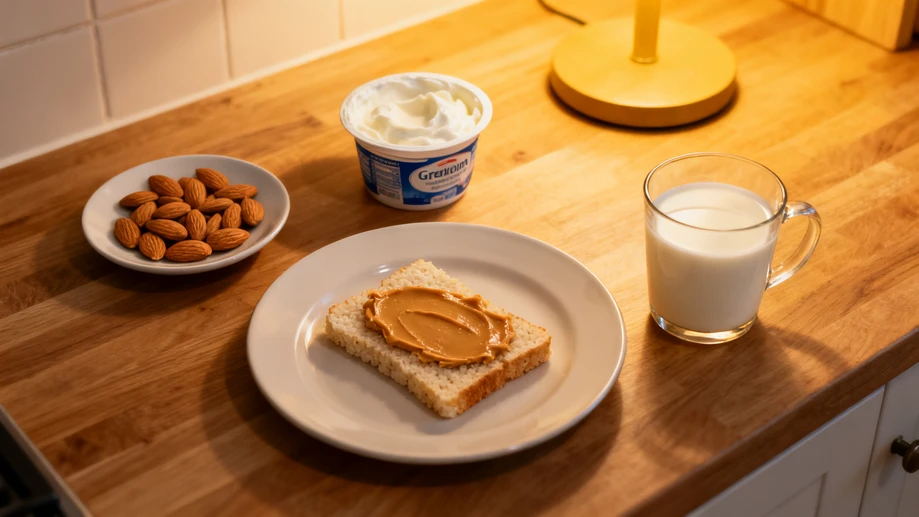
The key difference between a harmless, even beneficial midnight snack and one that will derail your diet progress lies in three super simple, easy to follow rules that require zero fancy ingredients or complicated cooking steps. First, the total calorie count of your pre-bed snack should never go over 150 calories, which is roughly the calorie amount in 12 unsalted raw almonds, half a cup of unsweetened plain Greek yogurt, or half a small steamed sweet potato. Second, the snack should have a balanced mix of small amounts of lean protein and complex carbohydrates, instead of being made of purely refined sugar or heavily processed fried ingredients. Third, you should never eat your pre-bed snack while scrolling through social media or watching a high-tension show, because distracted eating will make you consume far more food than your body actually needs before you notice it.
There are a handful of super accessible snack picks that almost every household keeps in the pantry, and they make perfect late night treats with zero negative side effects when consumed in the right portion. A small handful of shelled sunflower seeds with no added salt offers a nice dose of magnesium that helps relax your tense muscles after a long day of work, and a single small rice cake topped with a thin layer of unsweetened peanut butter will keep you full enough to avoid waking up at 3 a.m. with a sharp hunger pang that forces you to dig through your fridge for whatever leftover takeout you have stored there. Even a small cup of warm skim milk works perfectly as a pre-bed snack, as the small amount of tryptophan in milk helps your body produce melatonin more smoothly to support better sleep quality.
Many people who force themselves to completely avoid any food after 7 p.m. end up running into a common hidden problem that sabotages their long term diet efforts without them noticing. Extended periods of hunger that last for more than five hours before bedtime will raise your body’s cortisol level significantly, which is the stress hormone that signals your body to hold onto fat reserves rather than burn them for energy. This elevated cortisol level will also make you crave high-sugar, high-oil breakfast foods the next morning by more than 40 percent, according to long term diet tracking data from ordinary community fitness groups, and you will be far more likely to finish an entire big greasy breakfast platter without feeling full, which adds far more excess calories to your daily total than the 150-calorie healthy snack you chose to skip the night before.
At the end of the day, healthy eating is never a set of rigid, unbreakable rules that everyone has to follow no matter their personal schedule and preference. You do not need to cut out every small, comforting little treat that makes your long tiring days feel a little easier, and you do not need to push yourself to stay hungry for hours just to follow arbitrary rules made by people who do not understand your daily routine. Making small, gentle adjustments that fit your own life rhythm works far better than forcing yourself to stick to extreme diet plans that you can only keep up for a couple of weeks, and these tiny sustainable habits are the ones that will support your long term health for years to come.