
Mastering the Art of Perfectly Cooked Chicken Breast Every Single Time
Unlock the science behind succulent poultry with one simple technique that transforms your meal prep
Have you ever sliced into a chicken breast only to watch precious juices flood the cutting board while the meat itself turns into a dry, chewy disappointment? This culinary tragedy occurs daily in home kitchens worldwide, especially among health enthusiasts loading up on lean protein. The frustration is universal – you followed the recipe meticulously, timed everything perfectly, yet ended up with texture resembling cardboard. That mouthwatering chicken dish you envisioned has instead become a mandatory protein intake rather than a pleasure.
Surprisingly, the solution has nothing to do with cooking time or seasoning choices. The magic happens after the heat is turned off. When chicken cooks, muscle fibers tense and contract, pushing moisture toward the center. If sliced immediately, these released juices escape rapidly. Understanding protein behavior reveals that all meats need post-cooking recovery time, just as athletes require cooldowns after intense exercise. This biological reality explains why rushing to carve your roast is a grave mistake.
The transformative technique? Resting. Simply transfer cooked chicken to a warm plate and leave it undisturbed for 7-10 minutes. This pause allows proteins to relax and gradually reabsorb expelled moisture throughout the muscle fibers. Think of it as allowing the meat to "settle" and redistribute its internal liquids evenly. As it rests, residual heat continues gentle cooking while tensions dissolve within the tissue. For thick cuts or whole breasts, extend this to 15 minutes under a loose foil tent to retain warmth without steaming the exterior texture.
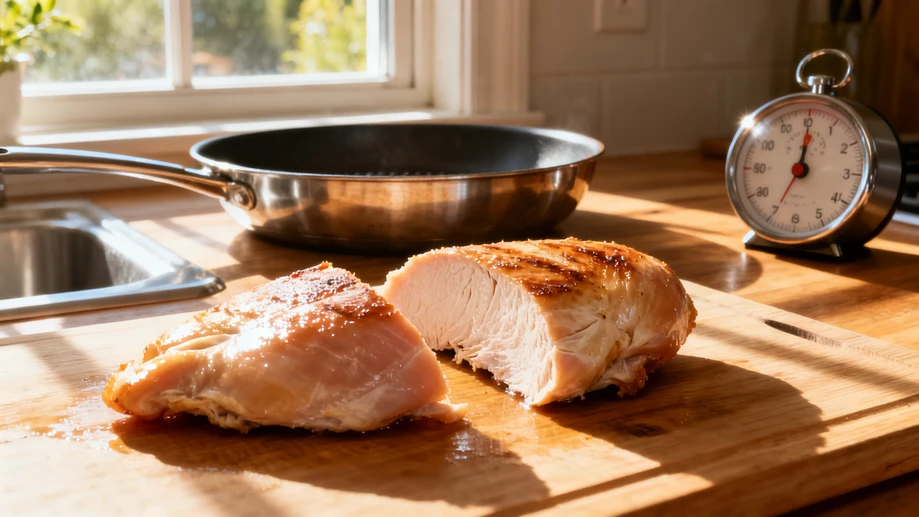
Visual cues confirm this process works. Watch as the surface transforms from piping hot and steaming to comfortably warm with a glistening sheen. When you finally slice, you'll find moisture evenly distributed rather than pooling out. The result? Chicken that's remarkably tender throughout, with each bite bursting with flavor instead of tasting washed out. Even better, seasoning penetrates more effectively when juices aren't rushing away from the surface. This effortless method costs zero extra time in active cooking.
Beyond moisture retention, resting prevents protein shrinkage that can ruin meal prep quantities. Unrested chicken loses up to 40% more volume as juices escape. When you've carefully measured portions for weekly lunches, this represents significant nutritional waste. Moreover, properly rested meat maintains its appetizing appearance rather than looking deflated and sad on your plate. The science here applies to all proteins – from fish fillets to lean turkey.
Implementing this small change revolutionizes your relationship with chicken. Suddenly, that humble breast becomes a juicy vehicle for global flavors instead of a dietary chore. Imagine herbed Mediterranean versions with olive tapenade, Asian-inspired glazed breasts with sesame crunch, or smoky paprika-rubbed cuts worthy of weekend feasts. With the texture problem solved, you'll discover new enthusiasm for healthy cooking. Your meal prep containers will hold genuinely tempting dishes.
Ultimately, this technique embodies how scientific understanding elevates everyday cooking. We control protein behavior not through complicated gadgets but by respecting its natural processes. That quiet ten minutes on the counter makes the difference between chewy obligation and culinary delight. Tonight, pull your chicken from the pan, set a timer, and walk away. When you finally slice into its moist perfection, you'll experience one of cooking's great satisfactions: mastering a fundamental principle that transforms nourishment into celebration.